
Why Won’t My Push Button Start Car Start?
Why Won’t My Push Button Start Car Start?
Push button start systems have become standard across many modern vehicles, offering convenience and removing the need to physically insert a key into the ignition. While these systems are designed to make everyday driving easier, they can also become incredibly frustrating when the vehicle suddenly refuses to start without warning. Many drivers experience situations where the dashboard lights come on, the smart key is clearly inside the vehicle, but pressing the start button does absolutely nothing.
At Sunny Coast Car Keys, we regularly assist drivers across the Sunshine Coast, Noosa and Gympie experiencing push button start and smart key problems with Hyundai, Mazda, Toyota, Nissan, Mitsubishi, Ford, Volkswagen, Mercedes and many other makes and models. In some situations, the fix is relatively simple, while in others the issue may involve the immobiliser system, steering lock module, smart key or onboard electronics.
Because modern vehicles rely heavily on electronic communication between multiple systems, even a minor fault can sometimes prevent the car from starting altogether.
How Push Button Start Systems Work
Push button start vehicles use proximity keys and electronic immobiliser systems to verify that the correct smart key is inside or near the vehicle before allowing the engine to start. When you enter the vehicle, antennas located throughout the cabin search for a coded signal from the smart key. If the signal is recognised correctly, the vehicle authorises the ignition sequence and allows the start button to function.
This process happens almost instantly, which is why many drivers do not realise how much electronic communication is actually occurring behind the scenes every time they start their vehicle. If the vehicle loses communication with the smart key, even temporarily, the push button system may stop responding completely.
Depending on the manufacturer and model, you may see dashboard messages such as “Key Not Detected”, “No Key Detected”, “Smart Key System Error” or “Immobiliser Active”. In many vehicles, the engine will either refuse to crank entirely or may crank without firing properly.
These issues are becoming increasingly common as vehicles become more electronically advanced and smart key systems age over time.
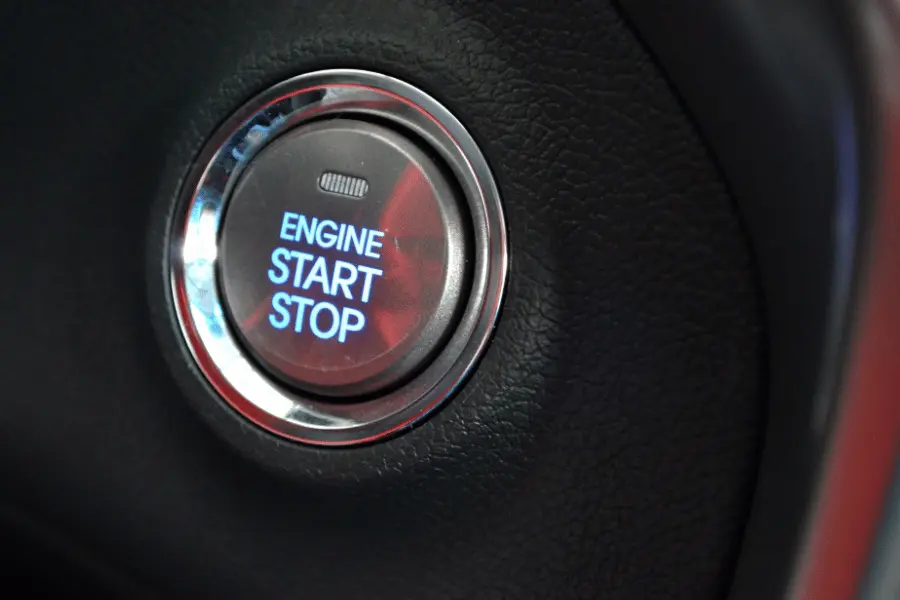
Flat Smart Key Battery
One of the most common reasons a push button start vehicle suddenly stops working is a weak or completely flat battery inside the smart key itself. Because the key relies on transmitting a coded electronic signal to the vehicle, even a partially weakened battery can create intermittent communication problems.
Drivers often notice symptoms gradually becoming worse over time before the vehicle stops recognising the key completely. You may find the remote locking range becomes shorter, the push button start only works occasionally or the vehicle displays warning messages randomly before eventually refusing to start.
In many cases, replacing the battery inside the smart key resolves the issue immediately. However, if the problem continues after replacing the battery, there may be a deeper issue involving the key itself, the immobiliser system or the vehicle electronics.
Because modern smart keys are more advanced than traditional keys, battery issues are now one of the most common causes of unexpected non-start situations across many makes and models.
Brake Pedal or Start Procedure Issues
Many drivers are surprised to learn that the brake pedal switch plays an important role in the push button start sequence. Modern vehicles are programmed not to start unless the brake pedal is properly detected as being pressed. If the brake switch becomes faulty, misaligned or intermittent, the vehicle may behave as though the brake pedal is not being pressed at all. This can result in the push button doing nothing even when the smart key is functioning normally.
Sometimes the issue may appear random or intermittent, which can make diagnosis frustrating for vehicle owners. The vehicle may start perfectly several times before suddenly refusing to respond altogether. In some situations, pressing the brake pedal more firmly or restarting the ignition sequence may temporarily solve the issue, but recurring problems usually indicate a component beginning to fail. Because these faults can mimic smart key or immobiliser issues, proper diagnostics are often required to determine the actual cause.
Smart Key or Proximity Key Faults
Smart keys contain delicate electronic components that can gradually wear out or become damaged from everyday use. Dropping keys, exposing them to moisture, leaving them in excessive heat or simply years of regular handling can all contribute to internal electronic failure.
We regularly see proximity keys with damaged circuit boards, worn internal buttons, water damage and failed transponder chips. In some cases, the remote still unlocks the vehicle normally, leading drivers to assume the key is working correctly. However, the immobiliser chip inside the key may no longer be communicating properly with the vehicle’s security system.
This can create confusing situations where the car unlocks successfully but refuses to start. These issues are especially common in older proximity keys that have experienced years of regular use. Because smart keys vary significantly between manufacturers, specialist programming and diagnostic equipment is often required to properly test and replace faulty keys.

Steering Lock & Immobiliser Problems
Many modern vehicles use electronic steering lock systems as part of their immobiliser security setup. These systems are designed to prevent the steering wheel and ignition system from operating unless the correct smart key is detected.
When steering lock modules begin to fail, the vehicle may suddenly refuse to start even when the correct key is clearly present inside the vehicle. Drivers often experience symptoms such as the steering wheel remaining locked, the push button becoming unresponsive or dashboard warnings relating to the immobiliser system.
Manufacturers including Hyundai, Nissan, Volkswagen, Mazda, Mitsubishi and Mercedes commonly use electronic steering lock systems that can develop faults over time. In some vehicles, the problem may begin intermittently before eventually becoming a complete non-start issue.
Because steering lock and immobiliser systems communicate directly with the ECU and security modules, these faults can be more complex than standard key problems and may require specialist diagnostics to identify correctly.
Weak Vehicle Battery
Sometimes the problem is not actually the smart key at all. Push button start vehicles rely heavily on stable battery voltage to operate correctly, and a weak vehicle battery can interfere with multiple onboard electronic systems simultaneously.
Low battery voltage may affect immobiliser communication, push button activation, steering lock modules and ECU functions. This can create symptoms that appear to be smart key faults when the underlying issue is actually the vehicle battery struggling to maintain sufficient voltage.
Drivers often notice slower cranking, flickering dashboard lights or intermittent electronic warnings leading up to the problem becoming more serious. In some cases, the vehicle may unlock normally but refuse to start because the battery voltage drops too low during the ignition sequence.
As vehicles become more electronically advanced, weak battery issues are increasingly triggering immobiliser and push button start warnings that can easily be mistaken for key failures.
What To Do If Your Push Button Start Stops Working
If your push button start vehicle suddenly refuses to start, there are several things worth checking before assuming the worst. Replacing the battery inside the smart key is often the simplest and most effective first step, particularly if the key has not had a battery replacement in several years.
If you have a spare smart key available, test whether the vehicle recognises it normally. This can help determine whether the issue is isolated to the key itself or related to the vehicle’s immobiliser system.
In many vehicles, holding the smart key directly against the push button or steering column can activate an emergency backup start mode. It is also worth checking the vehicle battery condition and ensuring the vehicle is properly in Park with the brake pedal firmly applied.
If the issue continues or becomes intermittent, professional diagnostics are usually required to determine whether the problem involves the smart key, steering lock system, immobiliser module or vehicle electronics.
Mobile Smart Key Programming & Diagnostics
At Sunny Coast Car Keys, we provide mobile automotive locksmith services across the Sunshine Coast and Gympie for vehicles experiencing push button start, smart key and immobiliser problems.
Using specialised programming and diagnostic equipment, we can assist with smart key replacement, proximity key programming, immobiliser diagnostics, replacement remotes, spare keys, ignition repairs and non-start faults for many makes and models. Because we operate as a fully mobile service, we can often diagnose and repair problems directly at your location without the inconvenience and expense of towing your vehicle to a dealership.
We regularly assist customers stranded at home, workplaces, shopping centres, accommodation properties and roadside locations throughout the Sunshine Coast region. If your push button start vehicle suddenly will not start or your smart key is no longer being detected, contact Sunny Coast Car Keys today.
We provide mobile smart key programming, replacement keys and immobiliser diagnostics across the Sunshine Coast and Gympie for many makes and models. Our goal is to identify the issue quickly and provide practical on-site solutions that help get you back on the road sooner. Call now for a FREE quote.
Replacement Car Keys on the Sunshine Coast
Don’t let a missing key ruin your holiday. Contact us today for fast, affordable car key replacement Sunshine Coast services. Our mobile team will come directly to your hotel, holiday rental, or wherever you’re staying, saving you the stress of towing, costly dealership visits, and lost time on your trip.